
Bruce and Grey Residents Encouraged to Help Shape the Future of Rural Ontario Through the HEAR Initiative
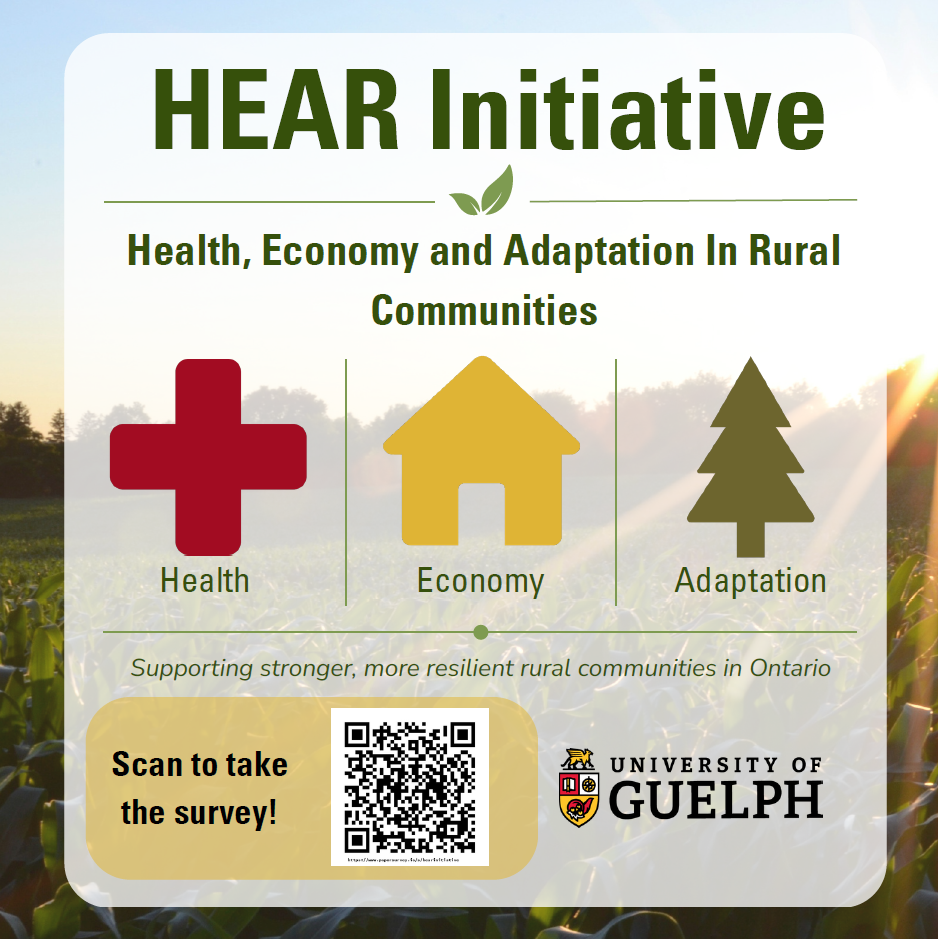
Rural communities like Bruce and Grey counties are unique. From healthcare access and affordable housing to employment, transportation, food security, and climate resilience, the challenges and strengths of rural life are often very different from those of urban centres. However, the data used to shape public policy, funding, and services does not typically reflect those realities. The HEAR Initiative was created to change that.
United Way of Bruce Grey is encouraging residents throughout Bruce and Grey counties to participate in the HEAR Initiative (Health, Economy, Adaptation in Rural Communities), a landmark research project led by the University of Guelph. The long-term study will collect information from approximately 200,000 rural households across Ontario over three survey waves in 2026, 2028, and 2030, helping build one of the most comprehensive collections of data ever assembled on rural life in the province.
For United Way of Bruce Grey, the importance of this initiative is clear.
Every day, the organization sees firsthand how local families are affected by rising living costs, limited transportation options, access to healthcare, affordable housing, food insecurity, and other challenges that are often more pronounced in rural communities. Programs and services like 211, the Good Food Box, Supportive Outreach Services (SOS), the Backpack Program, and partnerships with local agencies all demonstrate the need for better information to guide future investments and community planning.
“Strong communities begin with understanding the people who live in them,” said Francesca Dobbyn, Executive Director of United Way of Bruce Grey. “When Bruce and Grey residents share their experiences, they help create a clearer picture of what rural life really looks like. That information can help governments, researchers, municipalities, and community organizations make better decisions that reflect the needs of communities like ours.”
As Grey Bruce continues to feel the effects of wildfire smoke and poor air quality, the need for climate-resilient housing is more important than ever. Through RentSafe’s Collaborating for Climate Resilience project, the Bruce Grey Poverty Task Force, as lead partner for RentSafe Owen Sound in collaboration with RentSafe Ontario, is bringing together public health professionals, housing providers, planners, landlords, tenants, legal advocates, environmental experts, and community organizations to explore practical ways to improve climate resilience in low-income rental housing. The project focuses on addressing challenges such as extreme heat, poor air quality, flooding, and mould while strengthening policies, programs, and partnerships that support healthier, safer homes.
The HEAR Initiative focuses on three interconnected areas that affect everyday life in rural Ontario:
- Health, including healthcare access, mental health, aging, and quality of life.
- Economy, including employment, housing, affordability, and population change.
- Adaptation, including climate resilience, infrastructure, biodiversity, and emergency preparedness.
According to the University of Guelph, rural communities have historically been underrepresented in the data that guides funding and policy decisions. HEAR aims to close that gap by creating an open, publicly accessible data platform that communities can use to support local planning, funding applications, advocacy, and long-term decision-making.
For Bruce and Grey counties, this research could provide valuable evidence to support future conversations around healthcare services, affordable housing, transportation, economic development, climate adaptation, and other priorities facing rural communities.
“When rural voices are missing from the data, they are often missing from important conversations,” said Dobbyn. “This initiative gives our communities an opportunity to ensure that Bruce and Grey counties are represented in the evidence that influences provincial planning and funding.”
Residents are encouraged to learn more about the initiative and participate in the survey. Every completed survey helps build a stronger understanding of rural Ontario and contributes to more informed decisions that benefit communities for years to come. The initiative is designed to improve understanding of the experiences of rural and northern Ontarians by collecting community-level information on health, economic well-being, and climate adaptation to support stronger planning and decision-making.
The survey is confidential and takes 15-20 minutes to complete. For more information about the HEAR Initiative, visit https://hearinitiative.ca.
