
Living Wage Rises to $24.75 per Hour in Bruce Grey for 2026
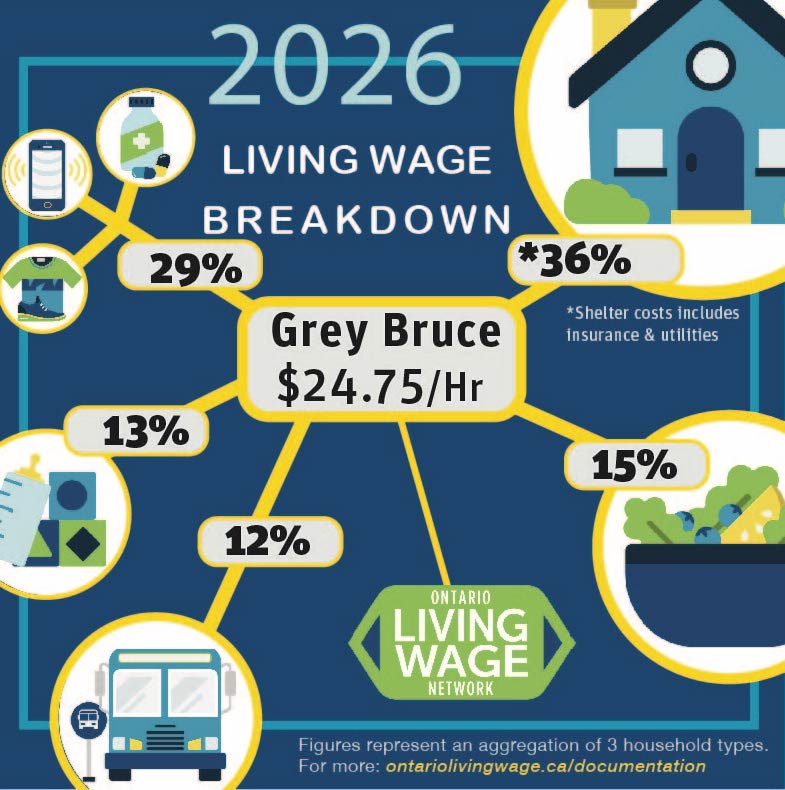
The cost of living continues to rise across Bruce and Grey counties, putting additional pressure on individuals and families trying to manage everyday expenses.
The Ontario Living Wage Network (OLWN) has announced that the 2026 living wage for Bruce Grey is $24.75 per hour, an increase from $24.60 in 2025. While the increase of 15 cents, or 0.61%, may seem small, it highlights the ongoing challenges of affordability in our communities.
For United Way of Bruce Grey, the living wage is an important measure of what it takes for people to meet their basic needs, maintain financial stability and participate in community life.
What Is a Living Wage?
A living wage is the hourly rate a person needs to earn to cover essential expenses, including housing, food, transportation, childcare and other household necessities.
Unlike Ontario’s minimum wage, which is established by the provincial government, the living wage is calculated based on the actual cost of living in a specific region.
The calculation considers three household types: a family with two working adults and two young children, a single parent, and a single adult. Government taxes, benefits and transfers are also factored into determining the hourly rate.
A living wage is not about luxury. It is about ensuring that people who work can afford a modest, reasonable standard of living in the communities they call home.
Housing Continues to Be the Biggest Expense
Housing remains the largest household expense in Bruce and Grey counties, according to the Ontario Living Wage Network’s 2026 calculations.
The reported breakdown of living costs includes:
- 36% for shelter, including insurance and utilities
- 29% for other household necessities and expenses
- 15% for food
- 13% for childcare
- 12% for transportation
These expenses demonstrate the financial pressures facing local households. From paying rent and purchasing groceries to maintaining a vehicle or arranging childcare, the cost of meeting everyday needs continues to challenge many residents.
For individuals and families already living on tight budgets, even modest increases in essential expenses can make financial stability more difficult to achieve.
Why a Living Wage Matters to Our Communities
Earning a living wage benefits more than individual workers. It can also contribute to stronger local businesses, healthier households and more resilient communities.
When people earn enough to cover their basic needs, they are better positioned to manage unexpected expenses, participate in community activities and support the local economy.
Francesca Dobbyn, Executive Director of United Way of Bruce Grey, emphasizes the importance of wages that reflect the realities of living in our region.
“A living wage is about more than just making ends meet. It is about ensuring that people who work in our communities can afford to live in them,” said Dobbyn. “We continue to see the pressures that housing, food and transportation costs place on individuals and families across Bruce and Grey counties. When workers earn enough to meet their basic needs, it benefits not only their households but also the local businesses and communities that depend on them.”
With businesses and households navigating economic uncertainty, rising operating costs and affordability challenges, the conversation about fair wages remains increasingly important.
Supporting Local Employers and Employees
Paying a living wage can also provide meaningful benefits for employers, including improved employee retention, workplace morale and staff loyalty.
“Employers who commit to paying a living wage report better morale, lower turnover, and stronger loyalty among their staff,” said Jill Umbach, Coordinator of the Bruce Grey Poverty Task Force. “We encourage more local businesses to step forward and join the network of certified living wage employers making a real difference.”
United Way of Bruce Grey recognizes that local businesses, particularly smaller employers, face financial pressures of their own. Open conversations about living wages can help identify sustainable approaches that support employees while recognizing the realities of operating a business.
Recognizing Living Wage Week 2026
November 9 to 13, 2026, marks Living Wage Week across Ontario, an opportunity to recognize employers committed to paying a living wage and raise awareness about the relationship between income, affordability and community well-being.
All 10 living wage regions across Ontario have reported increases for 2026, reinforcing the reality that the cost of meeting basic needs continues to rise throughout the province.
Living Wage Week also provides an opportunity for employers to learn about living wage certification and consider how their wage policies contribute to the financial well-being of their employees.
Building Stronger Communities Together
At United Way of Bruce Grey, we understand that financial stability plays an important role in the overall health and well-being of our communities.
The 2026 living wage of $24.75 per hour is an important reminder that working full-time does not automatically guarantee financial security.
By continuing conversations about fair wages, affordability and the challenges facing local households, we can work toward communities where more people have the opportunity to meet their basic needs and participate fully in community life.
Learn More
To learn more about living wage calculations, certified living wage employers and Living Wage Week, visit Ontario Living Wage Network and check out the Living Wage Employers Map – Ontario Living Wage Network to see where living wages are provided.
For more information about United Way of Bruce Grey and our community initiatives, visit www.unitedwayofbrucegrey.com.
