
#Financial Fridays – Plan How you Spend Your Money
There are so many things that drive our spending. And for people with manic episodes or low impulse control, it can add complications to an already fraught experience.
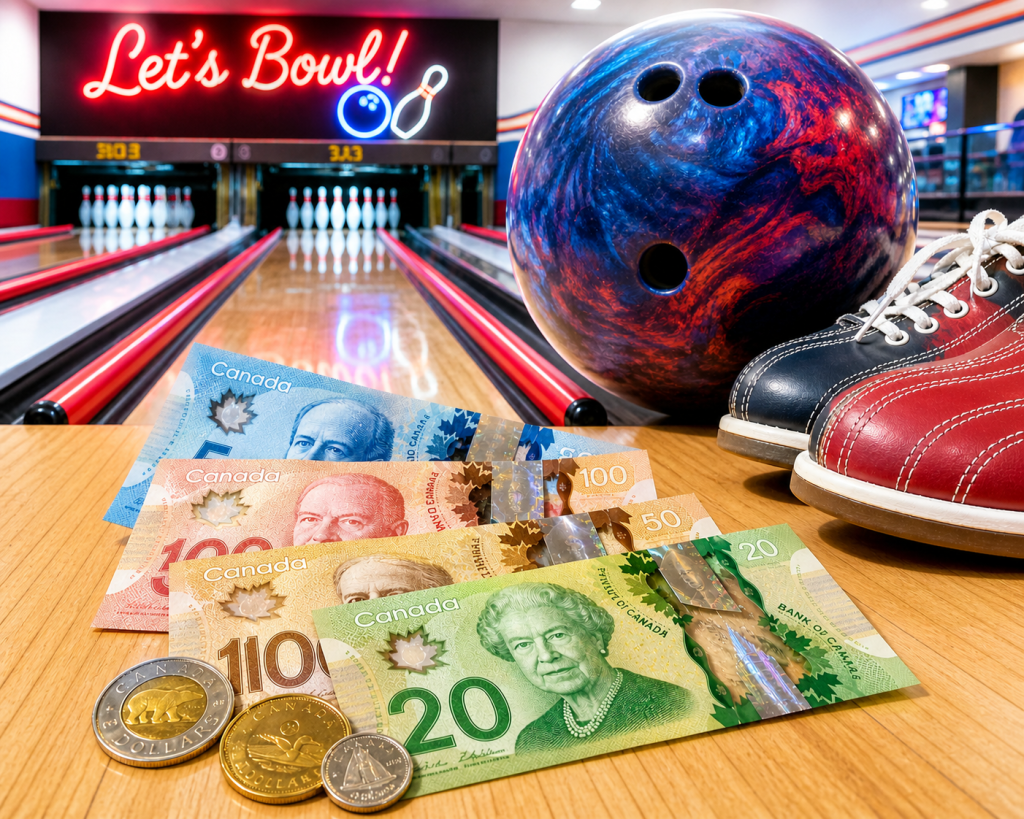
At bowling alleys, they can put bumpers along the lane to help keep the ball in the right place. Why not put bumpers in place to help manage your money, especially during times it is more difficult?
Planning and putting these ideas in place can help prepare for the mood, impulse, and behaviour cycles that come with various mental health experiences. This can help you be kind to yourself when things don’t go the way you want.
Here are some “bumpers” to think about:
Organize your accounts:
- Go through your bank statements or write down all your monthly expenses.
- Decide which ones are essential and must be paid every month. Add up this amount. This may be for rent, utilities, phones, insurance, groceries, medicine, etc.
- Set up two bank accounts: One for the essential expenses and one for non-essential expenses.
- Depending on which account your income goes to, set up an automatic transfer on the same day your income goes into the account to transfer money to the second account.
- For example:
- Account 1 is for essentials, and I need to have at least $1,100 in that account to cover my monthly essential expenses.
- Account 2 is for non-essential things. You may call this your “Splurge Account”.
- My income payment of $1,408 comes into Account 1 once a month.
- I have set up an automatic transfer for that same day for $300 to be transferred from Account 1 to Account 2.
- Use Account 2 for any non-essential expenses.
- When you feel the urge to splurge, use the money from Account 2.
- The “Splurge Account” helps you know the money is there when you are feeling the itch to spend, and know your other money is off limits in these cases. This way, money for your essential expenses is protected in Account 1, and the money in Account 2 is available for you to use on non-essential expenses.
Keep Receipts:
- Whether you are buying things at a physical store or online, keep your receipts.
- Keep physical receipts in a certain place so you know where they are.
- Set up a Receipts folder in your email to put receipts that are emailed to you.
- If you buy the item and then regret it, return it. You still get to enjoy the dopamine hit that comes with buying things, but you also are protecting your money by having what you need so you can return impulse purchases that you question afterwards.
Use your Wish List:
- When shopping online, put items in your “Wish List”.
- Wait a day or more to decide if you really want to buy that thing.
- Putting items in a “Wish List” can give you the same pleasure of buying the item and give you a waiting period to make sure you still want it after a day or longer.
- The waiting period also gives you time to make sure you have enough money to buy the item, and if the item is more important than something else you need or want to buy.
When we are going through mental health experiences, there are impulses and realities of those experiences that we can recognize and plan for. Why not plan? Put the bumpers in place, and be kind to all parts of who you are.
