
Financial Fridays: Friday the 13th Frauds!
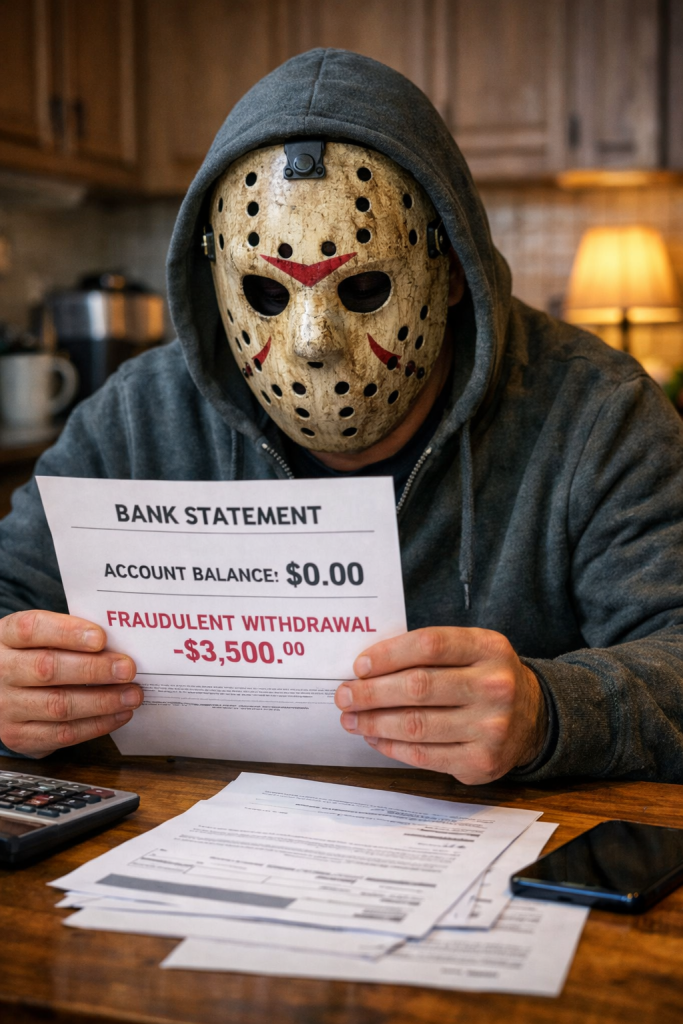
Fraud Prevention Month – Let’s Talk About It
There’s something about Friday the 13th that makes people glance over their shoulder. Black cats. Broken mirrors. Suspicious ladders. 🐈⬛
But the real bad luck most people face today isn’t superstition.
It’s fraud.
And unlike horror movies, fraud doesn’t come with dramatic music to warn you. It usually arrives as an ordinary text message, a polite phone call, or an email that looks almost perfectly legitimate.
During Fraud Prevention Month, it’s worth saying something clearly:
If you’ve been targeted or even tricked by a fraud, you are not alone. And you should never feel ashamed to talk about it.
Fraud happens to smart people, it happens to lonely people, it happens to single people, it happens to married people, it happens to professional people, it happens…to people!
Fraudsters are professionals. It’s their full-time job to create pressure, urgency, and believable stories. They study how people think and act.
They impersonate banks, government agencies, employers, charities, family members, and tech support.
And they succeed more often than people realize because many victims stay silent.
Embarrassment keeps people from telling friends, family, or even reporting what happened. But that silence is exactly what scammers rely on.
Fraud thrives in the dark.
Conversation turns on the lights. 🔦
Sharing Stories Protects Others
When people share what happened to them, something powerful happens.
Someone else recognizes the warning signs.
A neighbour realizes the same caller tried them yesterday.
A family member pauses before clicking a suspicious link.
Every story shared helps build a community that is harder to trick.
Trust Your “Something’s Not Right” Alarm
One of the best fraud prevention tools isn’t technology.
It’s your gut.
If a request makes you feel rushed, pressured, or uneasy, pause.
Before sending money, sharing information, or clicking a link, try one simple step:
Check in with a trusted person.
Call a friend.
Ask a coworker.
Talk to a family member.
Fraudsters work hard to isolate people and create urgency. Slowing down and bringing someone else into the conversation often breaks the spell.
If Something Happens, Get Help
If you think you’ve been targeted or defrauded:
- Tell someone you trust
- Contact your bank immediately
- Report it to the Canadian Anti-Fraud Centre
Getting help quickly can sometimes limit the damage, and reporting fraud helps authorities track patterns and warn others.
Most importantly, remember this:
Fraud is a crime committed against you. It is not a personal failure.
Final Thought for This Friday the 13th
On a day famous for superstition, the best protection isn’t luck.
It’s conversation, awareness, and looking out for one another.
So this Financial Friday, consider checking in with someone you trust and talking openly about scams and fraud.
Because when communities share their stories, scammers lose one of their most powerful tools: silence.
Stay safe, stay curious, and when something feels off… trust that instinct.
If You Think You’ve Been a Victim of Fraud
If something suspicious has happened, don’t keep it to yourself. Acting quickly can help limit the damage and may help prevent others from being targeted.
1. Contact your bank or financial institution immediately
If money, credit cards, or banking information were involved, your bank may be able to stop or reverse transactions and protect your accounts.
2. Report it to the Canadian Anti-Fraud Centre (CAFC)
This is Canada’s national reporting centre for scams and fraud.
- Online reporting: Report Cybercrime and Fraud
- Phone: 1-888-495-8501
The CAFC collects reports from across the country and shares information with law enforcement to track fraud trends and support investigations.
3. Report the incident to your local police
Local police can open a file and investigate, especially if money has been lost or identity theft is involved.
4. If your identity may have been compromised
Contact Canada’s credit bureaus (Equifax or TransUnion) and consider placing a fraud alert on your credit file.
